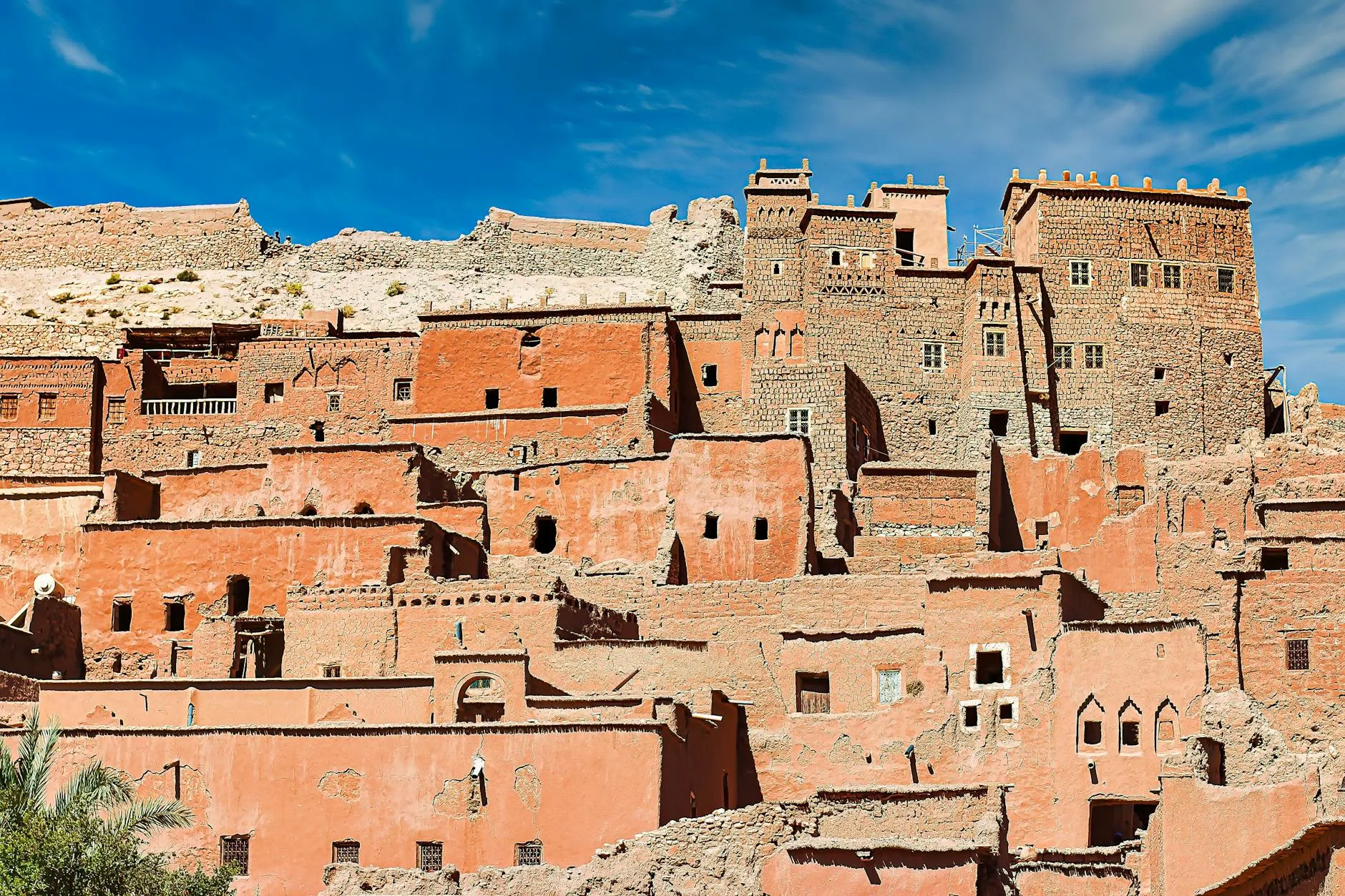
Numidian kings who minted their own coin and dated their own inscriptions, a Roman author who named his origin in court, and two Berber empires that ruled from the Sahara to Spain.
The Amazigh do not appear at the edges of other people’s history. They held kingdoms that Rome negotiated with and then fought, produced authors read across the Latin world, and founded empires that governed from the Sahara to the Ebro.
This page is the thread, and it is deliberately short on names. A list of rulers is easy to write and impossible to check. What follows sticks to the points where there is something to point at: a dated stone, a man’s own words, a standard history.
The Numidian kingdoms
The best evidence that the Numidian kings were a state rather than a tribal confederation is the same stone that anchors the archaeology pillar.
In 139 BCE the notables of Thugga dedicated a sanctuary to the memory of Massinissa, and dated the text by the tenth regnal year of his son and successor Micipsa (Dougga 139 BCE). Read what that requires. A reigning dynasty whose succession is public knowledge. A calendar reckoned by that dynasty’s years, which is how states keep time. Civic notables with the standing and the money to commission public monuments. And a chancery literate in two scripts, writing the Libyan alphabet beside Punic on the same stone.
Massinissa’s kingdom was a Roman ally during the Second Punic War and its successors a Roman problem afterwards, which is why Numidia appears in Latin historiography at all. The wider political narrative, from the Numidian and Mauretanian kingdoms through Roman and Vandal Africa, is set out in the standard survey (Brett & Fentress 1996).
Apuleius says it himself
The most common way North Africans enter Roman history is as subjects of somebody else’s sentence. Occasionally one of them writes the sentence.
Apuleius of Madauros, author of The Golden Ass and one of the most celebrated Latin prose stylists of the second century, stood trial at Sabratha on a charge of magic. In the speech he published afterwards, he deals with the prosecution’s jibe about where he came from:
De patria mea uero, quod eam sitam Numidiae et Gaetuliae in ipso confinio mei scriptis ostendi scis.
As for my homeland, you know from my own writings that it lies on the very border of Numidia and Gaetulia. (Apuleius, Apol. 24)
His accuser had called him “Seminumidam” et “Semigaetulum”, half Numidian and half Gaetulian, meaning it as an insult. Apuleius takes it and hands it back:
Non uideo quid mihi sit in ea re pudendum, haud minus quam Cyro maiori, quod genere mixto fuit Semimedus ac Semipersa.
I do not see what I have to be ashamed of in that, any more than Cyrus the Elder had, who was of mixed descent, half Mede and half Persian.
(Apuleius, Apol. 24)
This is worth more than a dozen attributions based on a birthplace or the shape of a name. It is a North African author, at the top of the imperial literary world, stating his origin in a courtroom and declining to be embarrassed by it. Note also what the insult concedes: for the jibe to land, “Numidian” and “Gaetulian” had to be live, recognised identities in second century Africa, not antiquarian labels.
Other Latin authors from Roman Africa are often named in the same breath, and some of those attributions are solid while others rest on inference. This page names the one who said it himself, and will add others as each is sourced.
Two empires
Between the eleventh and the thirteenth centuries the Maghreb was not a province of anyone. It was the centre of two successive empires that also ruled most of the Iberian Peninsula.
The Almoravids emerged from the Sanhaja of the western Sahara; the Almohads, who displaced them, from the Masmuda of the High Atlas (Bennison 2016). Both were Berber in origin, leadership and recruitment. Between them they governed from the Sahel to central Iberia, built Marrakesh into a capital, and were among the major powers of the medieval Mediterranean world.
This matters for the argument the rest of the site is having, because the claim being answered is usually some version of these people were always peripheral. For roughly two centuries they were the opposite of peripheral, and the record of it is ordinary medieval history, not a recovered memory.
Context: the idea of Tamazgha
One strand here is modern, and it is kept separate from the rest on purpose.
Nineteenth-century European scholarship already described a continuous Berber-speaking territory across North Africa, in Mercier’s framing extending from Egypt to the Atlantic and from the Mediterranean to the Sudan, though that phrasing comes through a later translation rather than directly from his French (Mercier 1888). The concept was taken up, reshaped and contested through twentieth-century nationalist and Amazigh thought, and the history of the idea itself has been written (El Guabli 2023).
This is a history of a concept, not evidence for the antiquity of a language. Mercier was a colonial historian and his framing carries that. It sits in this section, clearly marked, and is never mixed into the linguistic or archaeological record.
Into the present
The thread does not stop. Tamazight is an official language of Morocco under Article 5 of the 2011 Constitution (Morocco 2011) and of Algeria under Article 4 of the 2016 revision (Algeria 2016), which are treated in full on the language pillar.
What is still missing here
Being direct about the gaps, because this page has fewer anchors than the others:
- Individual Numidian and Mauretanian rulers beyond Massinissa and Micipsa are not yet separately sourced. Juba II in particular is usually listed as a Numidian king when he reigned over Mauretania, and that kind of shorthand is how errors enter.
- The Roman-era authors besides Apuleius need case-by-case treatment.
- The Arab conquest, the Vandal and Byzantine centuries, and the period between the Almohads and the modern state are not covered at all.
- There is no sourced master timeline yet.
Those will be filled in the same way as everything else here: one claim, one source, checked against the original.
Every citation on this page was checked against the original source. The Apuleius Latin was read directly from the transmitted text, not quoted from a secondary work. What was checked, and what was not, is recorded in each entry in the bibliography.
Last updated October 26, 2026 · View all sources · How this site is sourced